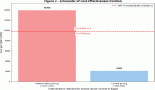
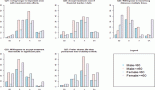
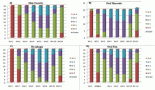
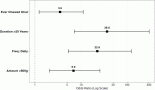
Scarce data is available regarding primary immunodeficiency-associated cancers in children in low-middle-income countries. This study aimed to determine the incidence, clinical features and outcomes of primary immunodeficiencies (PIDs)-associated cancers in children presenting to Pakistan’s largest public-sector specialised pediatric oncology center. Among 5,748 children with cancers registered over 5 years, only eight patients were found to have PID-associated pediatric malignancies with an incidence of 1.4 per 1,000 cases. The median age at the time of diagnosis was 6.5 years with a male-to-female ratio of 7:1. Only four types of PIDs were found to be associated with cancer in children at our center: Ataxia Telangiectasia in 37.5% (n = 3), hyper-IgE syndrome and IgG deficiency in 25% (each n = 2) and one case (12.5%) of common variable immune deficiency. Six different types of pediatric cancers were associated with PID with a predisposition towards hematological malignancies (n = 7, 87.5%). Only two patients (25%) survived. The median survival of the cohort was 3.5 months. Infection-related mortality was the cause of death in four patients (66%), and the type of PID was the only statistically significant factor associated with the outcome. It is concluded that a lesser proportion of PID-associated pediatric cancers are found in our center as compared to the reported data from high-income countries. PID-associated cancers in children have an abysmal prognosis and infection-related mortality is the major cause of treatment failure. Sensitisation of oncologists to look for any underlying PID, the introduction of PID-screening programs in children and consideration of PID-associated malignancies as a high-risk group for treatment may help improve the outcomes.

Supporting oncology professionals through education
The content on this site is intended for healthcare professionals only