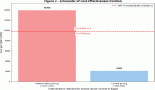
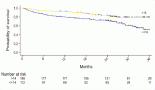
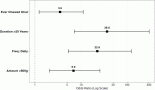
Despite the development of newer anti-Her2 agents, access to these medicines is still restricted with lapatinib being widely used as a second-line agent in Her2-positive metastatic breast cancer. However, lapatinib at approved doses of 1,250 to 1,500 mg/day contributes to a high pill burden and financial toxicity. In a population that has an average national per capita income of only USD 2238.1, lapatinib alone contributes to a financial burden of USD 6153.56 per year (approximately USD 500 per month). A concept of ‘value meal’ has been suggested – the higher bioavailability of lapatinib with the meal being exploited to reduce its administered dose. This concept was utilised in a resource-constrained tertiary care center in South India and we report the outcomes. In our institution, consecutive patients with Her2 positive metastatic breast cancer from 1 January 2014 to 31 December 2020 who could not afford trastuzumab, lapatinib or any other anti-Her2 agent were offered low-dose lapatinib, 500 mg daily with meal. We conducted a retrospective cohort study of the safety and efficacy of this regimen. Among the 47 patients who received low-dose lapatinib, the majority had de novo metastatic disease (57.4%) and multiple visceral metastases (48.9%). The median number of lines of treatment before lapatinib was one. The disease control rate with lapatinib was 61.7%. The median progression-free survival was 7 months (95% CI: 5.6–8.4 months). The median duration of response was 4.5 months, ranging from 1.3 to 45.8 months. Only eleven patients (23.4%) experienced toxicity, mainly dermatological, with grade 3 in only one (2.1%) and no grade 4 toxicities. Low-dose lapatinib is a regimen that offers an acceptable disease control rate. This strategy requires further exploration, particularly for the benefit of resource-limited areas.

Supporting oncology professionals through education
The content on this site is intended for healthcare professionals only