Background: Acute leukaemias (AL) are a group of heterogeneous malignancies characterised by clonal hematopoietic progenitor cell proliferation. Despite advances in the therapy of acute lymphoblastic leukaemia (ALL) and acute myeloid leukaemia (AML) in developed countries, outcomes in developing countries like Armenia are thought to be substantially worse.
Aims: The aim of this article is to understand how the limitations in diagnostic and treatment modalities in Armenia impact the clinical outcomes of AL patients and by presenting it to health authorities contribute to the development of evidence-based policies and regulatory improvements to enhance patient care.
Methods: We interrogated data from 431 adults representing all cases of adult AL in Armenia at the Hematology Centre of Armenia from 1 January 2016, to 31 December 2020. Death data were obtained from the United Information System of Electronic Healthcare in the Republic of Armenia. There were some limitations with data collection due to the absence of a unified electronic database and detailed paper records.
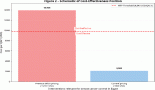
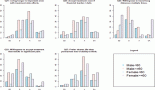
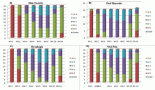
Results: Over the 5 years a total of 431 patients were diagnosed with AL at the Hematology Centre of Armenia of which 310 (72%) died. Male patients’ number was 131 (54%). Median age was 59 years (Interquartile Range = 50, 18–85 years). A morphological complete remission before death was reached in 82 (34%) patients, including 24 dying without relapse. Additionally, 50 subjects (20%) died during induction chemotherapy including 9 with ALL, 37 with AML and 1 with mixed-lineage leukaemia. Causes of death included no response to treatment (N = 29) or therapy-related complications including septic shock (N = 5), acute heart failure (N = 5), brain hemorrhage (N = 2) and acute respiratory failure (N = 1). Causes of death were unclear in eight patients. Thirty subjects failed induction therapy and declined further treatment before starting the induction. In 24 subjects’ remission, state and death causes were unclear. Before starting chemotherapy 58 subjects died, 26 of whom refused therapy and 24 had leukaemia progression. A 5-year survival was 22% including 26% for ALL and 21% for AML.
Conclusion: The results of AL therapy in Armenia are worse than those reported in developed countries, where overall survival is about 60%. The major reasons are leukaemia progression and treatment-related complications.