Purpose: Modern radiotherapy is a complex, technology-driven process that requires precise planning and delivery to maximise tumour control and minimise harm to normal tissues. Errors in radiotherapy can result in underdosing tumours or overdosing healthy tissues, posing serious risks to patients. In the Eastern Mediterranean Region and Turkey (EMRO+T), variations in workforce expertise, institutional policies and regulatory frameworks contribute to inconsistencies in incident reporting and safety practices. While some centers adhere to international guidelines, others lack structured mechanisms for reporting and learning from errors. A regional incident learning system (ILS) could standardise reporting, enhance safety culture and improve patient outcomes.
Methods: A cross-sectional survey assessed the state of radiotherapy ILS in EMRO+T. Ethical approval was obtained (CCCRC-94-2023), and the survey was distributed via Research Electronic Data Capture to 671 radiation oncology professionals. It gathered data on institutional classification, patient volume, technologies, local ILS presence, adherence to guidelines and perceptions of a regional ILS. Responses from 135 participants across healthcare settings were analysed.
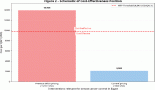
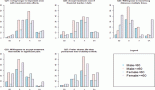
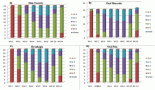
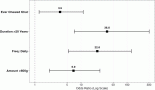
Results: Most respondents (66%) were from government hospitals, and 29.5% worked in private institutions. About 25% of centers treated over 2,000 patients annually, and advanced techniques such as intensity-modulated radiotherapy (75.2%) and stereotactic body radiotherapy (52%) were widely used. However, only 70.7% adhered to international reporting guidelines, and just 48.4% had a local ILS. Barriers included a lack of leadership support (51%) and confidentiality concerns. Although 62% supported reporting by all staff, opinions on confidentiality varied. Regular incident review occurred in 64% of institutions and 91.7% strongly supported a regional ILS.
Conclusion: A regional ILS would foster knowledge-sharing, encourage a non-punitive culture and enhance transparency, accountability and continuous quality improvement in patient safety.