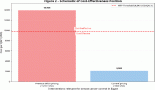
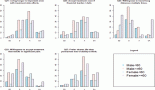
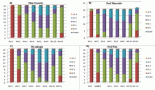
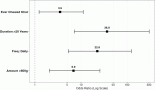
Genitourinary-Rhabdomyosarcomas (GU-RMS) are challenging to treat due to the probable lifelong sequelae of local therapy. Western-world data show 3-year event-free survival (EFS) and overall survival (OS) of 77% and 86%, respectively, for localised disease, with dismal outcomes for metastatic disease. We studied the clinical profile, outcomes and prognostic factors of GU-RMS treated with a multimodal protocol. Treatment-naïve children ≤ 15years with biopsy-proven GU-RMS treated from January 2013 to June 2022 were retrospectively analysed. Local therapy performed at 10–12 weeks of induction was radiotherapy (RT) and/or surgery. Fifty-two patients with a median tumour size of 5.5 cm (range, 3.4–9.2 cm) were analysed. Four patients (7.8%) had alveolar histology. The bladder was the commonest site of primary (36.5%). Group distribution: I-7 (13.4), II-1 (1.9%), III-35 (67.3%) and IV-9 (17.3%). Local therapy was surgery in 11 (21.5%), RT in 25 (49%) or both in 14 (26.9%) patients. With a median follow-up of 56 months (95% confidence interval (CI): 49.1%–63.1%), 4-year EFS for groups I–IV, were 100%, 50% (95% CI: 41%–59%) and 33.3% (95% CI: 2.6%–64%) (p = 0.01), respectively. The corresponding 4-year OS were 100%, 72% (95% CI: 56.4%–87.6%) and 33.3% (95% CI: 2.6%–64%) (p = 0.007), respectively. Relapses were locoregional-4 (7.7%), metastatic-5 (9.6%) and combined-4 (7.7%). Tumour size > 6.45 cm significantly affected outcomes in the localised cohort (hazard ratio = 4.1, 95% CI: 1.38–12.1, p = 0.01). Outcomes of group III GU-RMS in children treated on a multimodal protocol in our study are suboptimal compared to those from co-operative group trials, probably affected by large tumours at presentation, warranting alternative strategies for optimisation of survival.

Supporting oncology professionals through education
The content on this site is intended for healthcare professionals only